- Light, background, colour, sharpness and scenes can be rebuilt from phone photos.
- Missing angles, unreadable text and true colour cannot be guessed. They have to exist in at least one photo.
- Ten minutes of careful phone shooting saves days of rebuilding. The checklist is below.
- Send the photos, the product link, packaging files and where the images will be used.
Most products we work on arrive as phone photos taken on a kitchen table. That is fine. The question is never "are the photos good?", it is "does the information exist?". If a detail is visible in at least one photo, it can usually be rebuilt into a clean, sharp professional product photo. If it is not visible anywhere, any tool, AI included, will invent it.
What can be rebuilt from phone photos
- Background. A cluttered table becomes a clean studio backdrop, a coloured set or a full lifestyle scene.
- Light. Harsh kitchen light, mixed daylight and lamp light, flash glare: all fixable when the product shape is clear.
- Sharpness and noise. Soft focus and low-light grain can be cleaned, as long as the detail is present and not just a blur.
- Perspective. Slight tilt and wide-angle distortion from a phone lens can be corrected.
- Crops and formats. One good photo can become a square shop image, a 4:5 feed post and a 9:16 ad with space for text.
- Scenes. The product can be placed on a counter, in a gift box, outdoors or on a styled set. Read more about this in our guide to AI product photography for brands.
What cannot be rebuilt
- Sides nobody photographed. If the back of the box was never shot, the back of the box in the final image is a guess.
- Text that is unreadable everywhere. Ingredients, small print and serial numbers have to be legible in at least one photo or supplied as a file.
- True colour without a reference. Phones shift colour. If the exact shade matters, we need a reference: a brand colour code, a packaging PDF, or a photo next to something white.
- Scale. A photo alone does not show whether a candle is 8 or 18 centimetres tall. Dimensions or a photo next to a known object solve this.
- Texture that was lost. Wool, linen, brushed metal and wood grain need one close photo where the texture is actually visible.
How to take phone photos that are easy to rebuild
You do not need equipment. You need ten careful minutes.
- Shoot near a window in daylight, not in direct sun. Turn off ceiling lights so colours do not mix.
- No flash, no zoom. Move the phone closer instead of zooming. Zoom throws away detail.
- Shoot every side: front, back, both sides, top, bottom, and one three-quarter angle.
- Shoot the label straight on, close enough that every word is readable on your screen.
- Add one detail photo of the most important texture or feature.
- Add one photo next to a white sheet of paper for colour, and one next to a hand or a ruler for scale.
- Send originals, not screenshots or images forwarded through a messaging app, which compresses them.
What to send a creative studio before a project
A good brief does not have to be a document. It has to answer a few questions so nothing gets guessed. This is the checklist we use when material arrives:
| Send | Why it matters |
|---|---|
| All product photos you have, even bad ones | Every photo is a source of shape, colour and detail |
| Product link or product sheet | Dimensions, materials, variants and the claims you already make |
| Packaging files (PDF, dieline, print files) | Exact text, logos and colours, so labels are never redrawn by hand or by AI |
| Where the images will be used | A shop page, Meta ads, Amazon and a printed catalogue all need different formats |
| Two or three references you like, and one you do not | Faster than describing a mood in words |
| Deadline and launch date | Decides whether this is a sprint or a full campaign |
| Usage rights you need | Web only, paid ads, print, packaging, territory and duration change the scope |
A voice note explaining the product in your own words is often more useful than a formal brief. It tells us what you are proud of and what customers usually ask.
What this looks like in practice
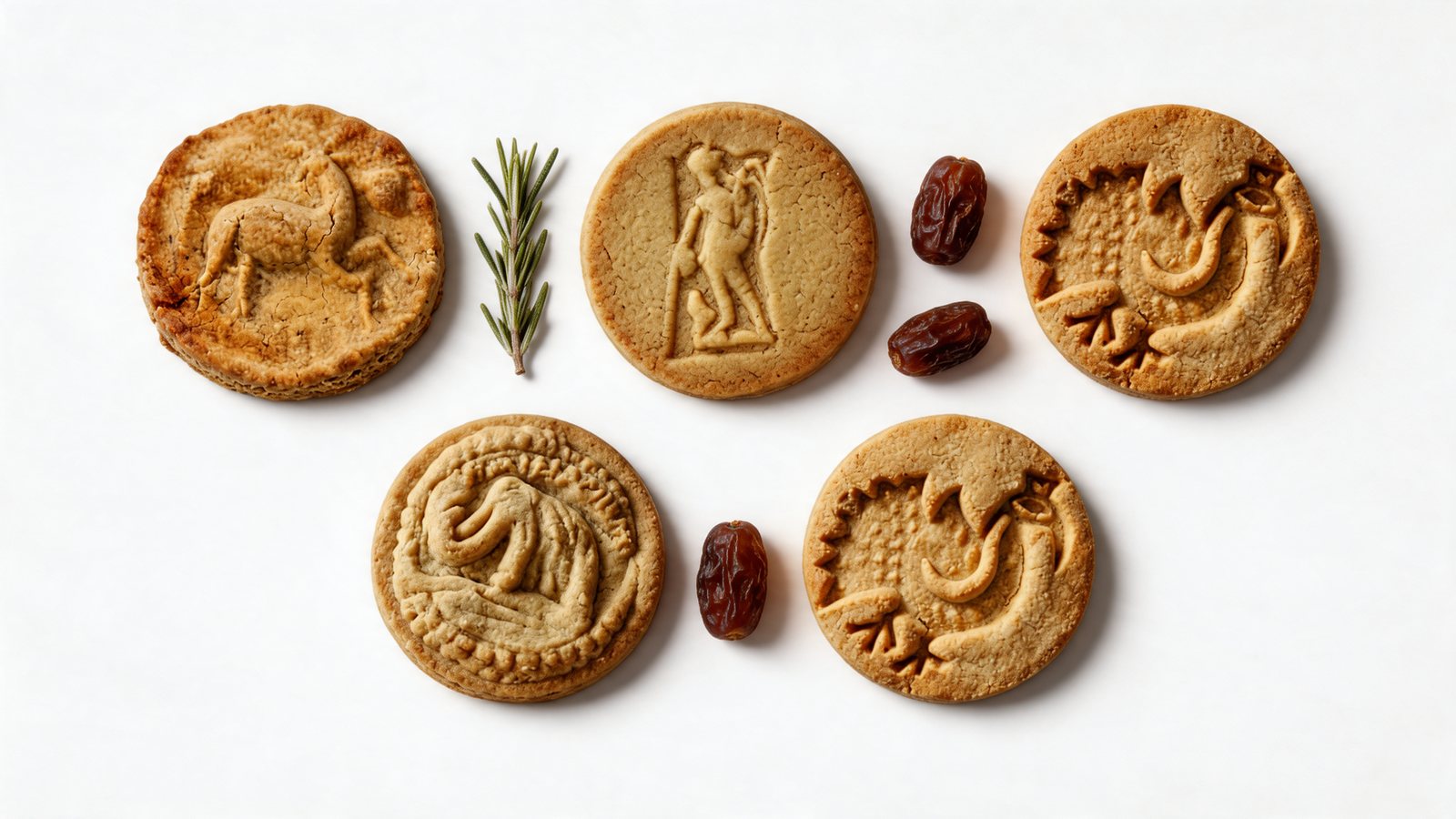
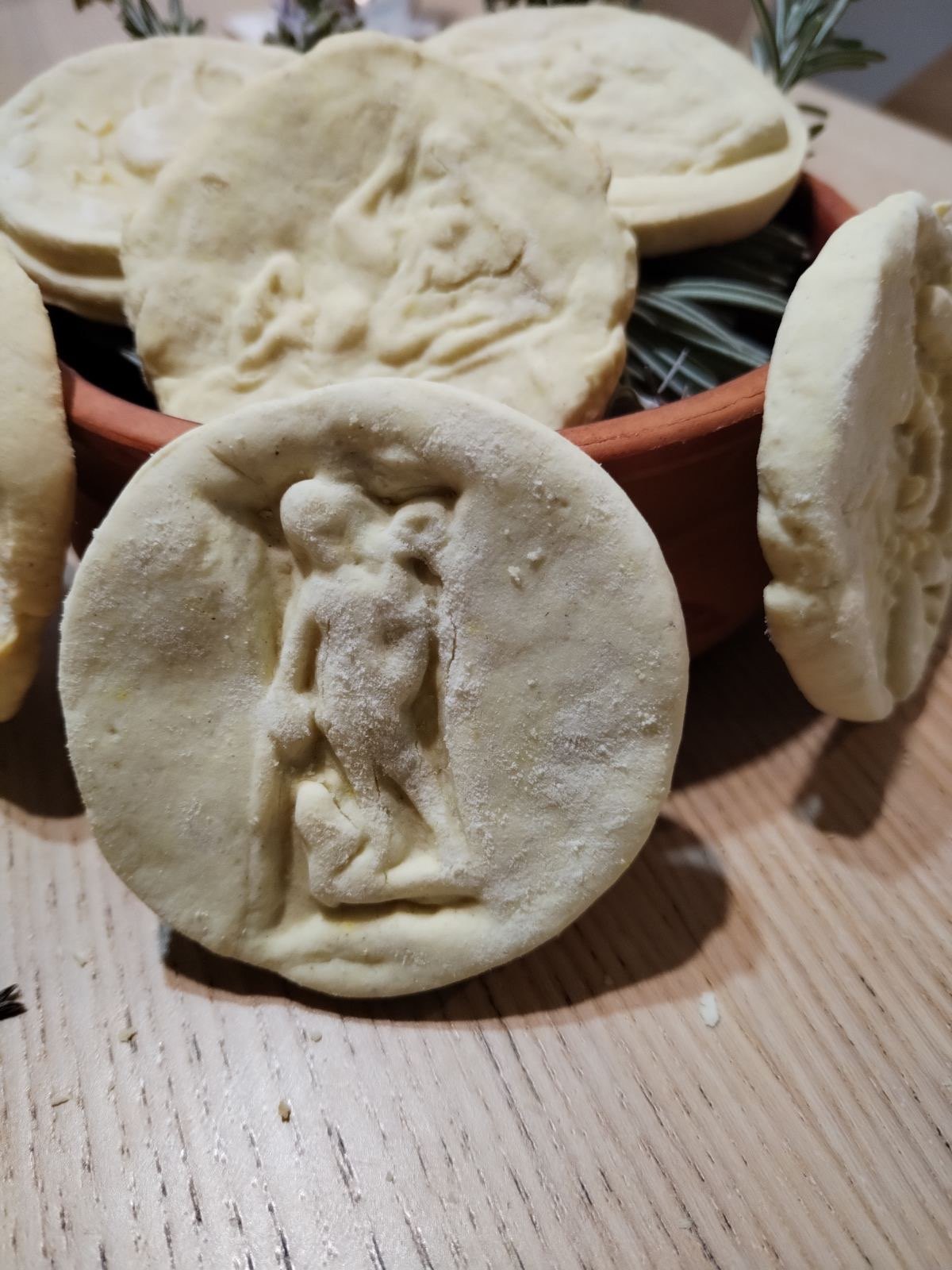
For Amulum, the Institute of Archaeology's Roman-motif cookie project, we received a few product photos, a blurry package shot and a loose idea. The motifs pressed into the cookies were visible in the photos, just soft and badly lit. That was enough: in a 48-hour sprint they became product page images where every motif is readable. The full story is in the Amulum heritage branding case study.
For Woolkica, a handmade weaving and felting brand, the challenge was different: texture. Felted wool reads as a flat colour unless one close photo shows the fibres. We planned product stills, texture details and social crops as one pack, so the shop, Instagram and Etsy look like the same brand.
Rebuild or reshoot?
Rebuild when the photos contain the information and the problem is presentation. Reshoot when the information is missing. A quick audit of what you already have answers that before any money is spent. If you are weighing the options more broadly, our comparison of AI vs traditional product photography goes through cost and quality side by side.
Have rough material for a product?
Send the phone photos, the PDF or a voice note. Qualified briefs get a first scope direction within 4 hours.