- Short product ads can be built from approved stills, renders and existing assets, without a film shoot.
- Start from one message and one visual world, not from a tool.
- Build each ad in the formats it will run in: 9:16 for Reels and TikTok, 4:5 or 1:1 for feeds, 16:9 for YouTube and the web.
- Check every frame for product drift. Motion makes small errors easier to see, not harder.
A product video ad used to mean a shoot: a location, a crew, a day of filming and a week of editing. For short social ads that is often no longer necessary. Most ads that run in feeds are 6 to 30 seconds long, watched without sound, and judged in the first second. What they need is a clear message and frames that look like your brand. Both can come from material you already have.
What you need before you start
- Approved product images. These are the anchor. If you do not have them yet, start with the stills; see our guide to AI product photography for brands.
- One message per ad. "Handmade in small batches", "ready in 48 hours", "designed with archaeologists". One claim, one ad.
- Brand assets. Logo files, fonts, colours, and any packaging files, so text and logos are never redrawn.
- Channel list. Where the ad will run decides ratio, length and how much text it can carry.
Four ways to build a product ad without filming
1. Motion from stills
Camera moves, parallax, slow push-ins and cuts between approved images. Simple, safe and very effective for product pages and retargeting, because the product stays exactly as photographed.
2. Generated motion from approved frames
Video models can animate a still: steam rising from a cup, light moving across a box, a product turning slightly. We generate from approved frames only, so the product is locked before motion is added. This is where most of the "wow" in a short ad comes from, and also most of the risk.
3. Type-led ads
Bold text, a few product frames and a rhythm. Often the best performer for offers and launches, because the message is readable with the sound off.
4. Hybrid with real footage
A few seconds of phone video (hands opening the box, a pour, a texture) combined with generated scenes. Real footage adds trust, generated scenes add scale.
Example: a 14-second launch film
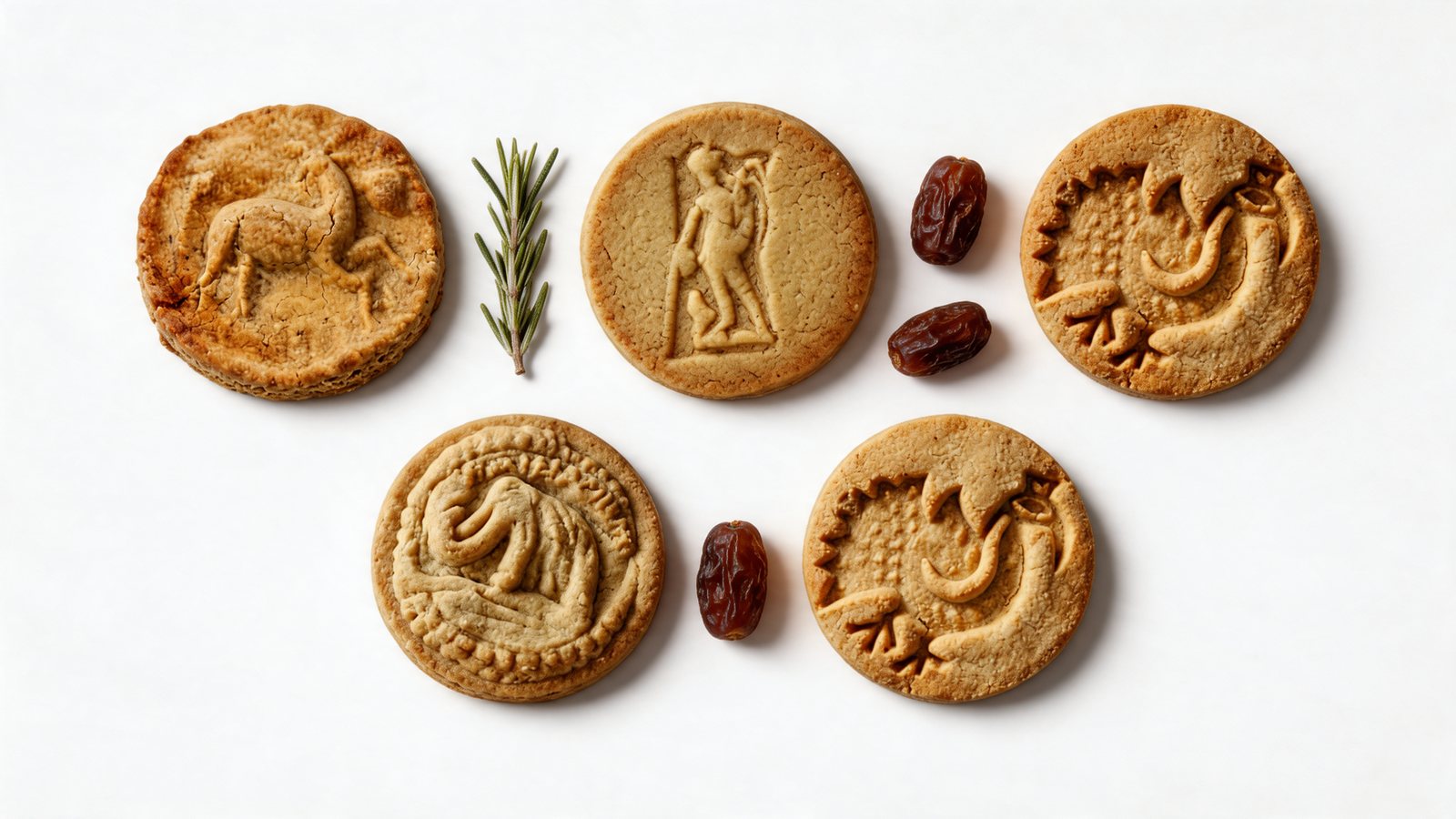
For Amulum, Roman-motif cookies made with the Institute of Archaeology in Belgrade, the launch needed a short film that looked like the website and the product images, not like a separate production. We built the film from the same approved visual direction: frames, cuts and a poster, no film crew.
The full background of the project is in the Amulum heritage branding case study.
Formats and lengths
| Placement | Ratio | Typical length | Note |
|---|---|---|---|
| Reels, TikTok, Stories, Shorts | 9:16 | 6 to 20 s | Keep text away from the top and bottom, where the app interface sits |
| Feed (Meta, LinkedIn) | 4:5 or 1:1 | 6 to 15 s | Product visible in the first frame |
| YouTube, website, launch page | 16:9 | 15 to 30 s | Room for a short story and an end card |
| Product page loop | 1:1 or 4:5 | 4 to 8 s | Silent loop with no visible cut, no text |
Plan these at the start. Reframing a 16:9 film into 9:16 afterwards usually cuts off the product or the text.
A structure that works for short ads
- Second 0 to 1: the product, large and clear. No logo intro.
- Seconds 1 to 4: the one claim, as text on screen.
- Middle: proof. A detail, a texture, a scene of use.
- End: the product again, the offer or the next step.
Captions and on-screen text matter more than music. Most feed video is watched muted.
Common mistakes
- Product morphing. In generated motion, labels warp and shapes shift between frames. Check frame by frame and cut anything that drifts.
- A different look from the shop. If the ad looks like one brand and the product page like another, trust drops at the click.
- Too many messages. Three claims in eight seconds means none of them land.
- One version only. Ads tire quickly. Build variations of the hook and the first frame from the start.
What it costs
Without a shoot, the cost of a product video ad is mostly direction, generation time, editing and checking. It is usually far below a filmed production, and it scales well: once the visual world exists, new variations are fast. Video is often part of a wider launch set; our guide to product launch creative package costs shows how it fits into the budget.
Have rough material for a product?
Send the phone photos, the PDF or a voice note. Qualified briefs get a first scope direction within 4 hours.